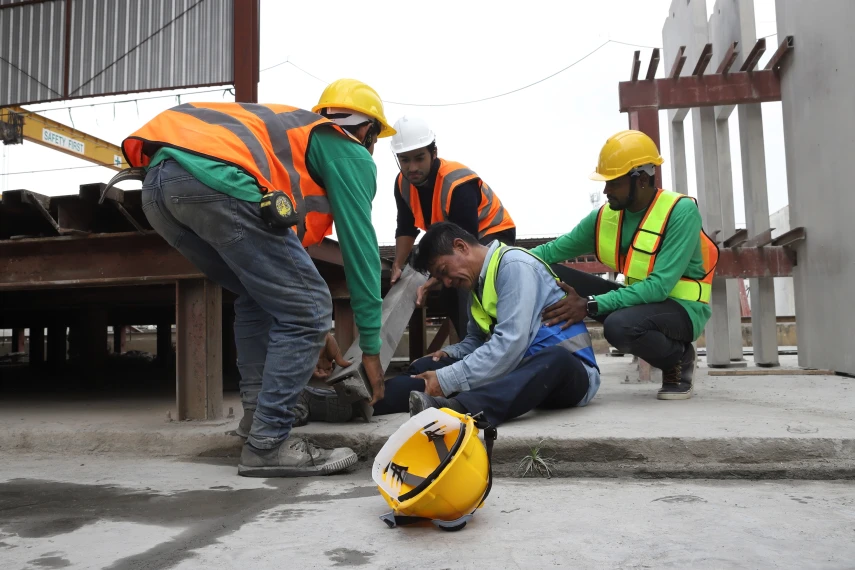
A fall from a scaffold, a truck that never should have been on the job site, a piece of equipment nobody bothered to inspect. However it happened, you’re staring at medical bills that keep coming and a paycheck that stopped.
There’s no flat number for what a construction accident case is worth in North Carolina. It depends on how badly you were hurt, whether workers’ compensation is your only path to recovery or a third party opened up a second one, and how much insurance exists to pay you. Workers’ comp alone rarely covers what you’ve lost. A third-party claim sometimes can.
Key Takeaways
- Workers’ comp pays a fixed formula, two-thirds of your average weekly wage, capped at $1,446 a week in 2026, with nothing for pain and suffering.
- Many construction sites involve more than your employer. Subcontractors, equipment suppliers, and property owners can become third-party defendants.
- A third-party claim isn’t capped by a wage formula and can include pain and suffering.
- North Carolina’s contributory negligence rule can reduce a third-party claim to zero if you’re found even slightly at fault.
- You have 30 days to report the injury to your employer, two years to file with the NC Industrial Commission, and three years for a third-party lawsuit.
If any of this sounds like your situation, O’Malley Tunstall PC offers a free case evaluation to walk through what your claim might be worth.
What Determines the Value of a Construction Accident Case
Three things determine the value of a construction injury claim:
- The severity of your injuries. The worse your injuries, the more you may recover for medical costs and lost income. The type of injury may also impact what you can recover for pain and suffering in a third-party lawsuit.
- Who is responsible for your injuries. If your employer caused your injury, you may recover through workers’ compensation. If a third-party caused your injury, you may have a legal claim that allows you to recover additional damages.
- Insurance policy limits. You may only be able to recover up to the limits of insurance policies, except in narrow circumstances.
Workers’ Comp Runs on a Formula. A Third-Party Claim Doesn’t.
Workers’ compensation in North Carolina pays your medical bills and two-thirds of your average weekly wage up to a maximum the Industrial Commission sets every year. For 2026, that ceiling sits at $1,446 a week. Specifically:
- Temporary total disability pays two-thirds of your average weekly wage while you’re completely out of work, capped at the Industrial Commission’s yearly maximum.
- Temporary partial disability pays two-thirds of the gap between what you used to earn and what you can earn now on light duty.
- Permanent partial disability pays a set number of weeks tied to the specific body part injured.
Third-party claims work differently. You may be able to sue a third-party for the full value of what you lost, including all medical bills, the full value of your lost wages, pain, suffering, disfigurement and other damages.
When a Third Party Turns Your Case Into Something Bigger
Construction sites are rarely a two-party relationship between you and your employer. A single job might involve a general contractor, several subcontractors, an equipment rental company, and a property owner, and any one of them can end up as a defendant if their negligence contributed to your injury.
Who Else Might Be Responsible
A general contractor who ignored known safety violations, a subcontractor whose crew left a walkway blocked, or an equipment manufacturer whose lift had a defect nobody caught can be a defendant separate from your employer.
Why It Changes the Math
Because a third-party defendant isn’t shielded by the workers’ comp system, a construction accident attorney can pursue the same damages available in any personal injury case. This could include full lost wages instead of two-thirds, lost earning capacity if your trade requires physical work you can no longer do, and pain and suffering.
The Catch: Paying Workers’ Comp Back
If you win a third-party settlement, the carrier that already paid your medical bills and wage benefits usually has a right to be reimbursed out of it, a process called subrogation. Negotiating that repayment down before the money changes hands is often important.
North Carolina’s Contributory Negligence Rule Can Erase Your Claim Entirely
Most states reduce your compensation by your percentage of fault. North Carolina doesn’t. Under the contributory negligence rule, if the defense proves you were even 1% responsible, your third-party claim can be worth nothing unless an exception to the general rule applies. This rule doesn’t touch workers’ compensation, which stays no-fault.
Deadlines That Can Cost You the Case Before It Starts
Missing a deadline can turn a strong case into no case at all, and North Carolina runs two clocks at once.
- Report the injury to your employer in writing within 30 days, using a Form 18 if your employer hasn’t already filed one.
- File your claim with the NC Industrial Commission within two years of the accident date.
- File any third-party lawsuit within three years of the accident date, under N.C. Gen. Stat. § 1-52.
These deadlines don’t move for a construction accident case that’s still under investigation or waiting on a final diagnosis. The clock usually starts on the date of the accident.
Frequently Asked Questions
How much does hiring a construction accident attorney cost upfront?
We work on contingency, so you pay nothing upfront and no fee unless we recover money for you. That means you can afford experienced representation right after an accident, when the bills are already piling up.
Can I sue my employer directly instead of filing workers’ comp?
Generally no. Workers’ compensation is your exclusive remedy against your employer in exchange for no-fault benefits. There’s a narrow exception if your employer intentionally caused your injury or failed to carry the required coverage.
What if the responsible contractor doesn’t have enough insurance to cover my injuries?
You may still recover from other sources, including additional defendants with their own policies or your own underinsured motorist coverage in vehicle-related site accidents. Construction sites often carry several layers of insurance, from the general contractor’s policy down to an individual sub’s coverage. An attorney works to find every policy that might apply, not just the obvious one.
O’Malley Tunstall PC: A North Carolina Construction Accident Law Firm
You came here trying to put a number on something insurance companies would rather you never fully understand, and now you know it comes down to wage math, fault, and who else might share the blame besides your employer.
O’Malley Tunstall PC has spent years untangling that kind of case for construction workers across Raleigh, Rocky Mount, and the rest of North Carolina, chasing every source of recovery instead of settling for the first number an adjuster offers. If a fall, a defective piece of equipment, or someone else’s carelessness put you here, you deserve a real answer, not a guess. Contact our firm today, and we’ll start figuring that out together.