
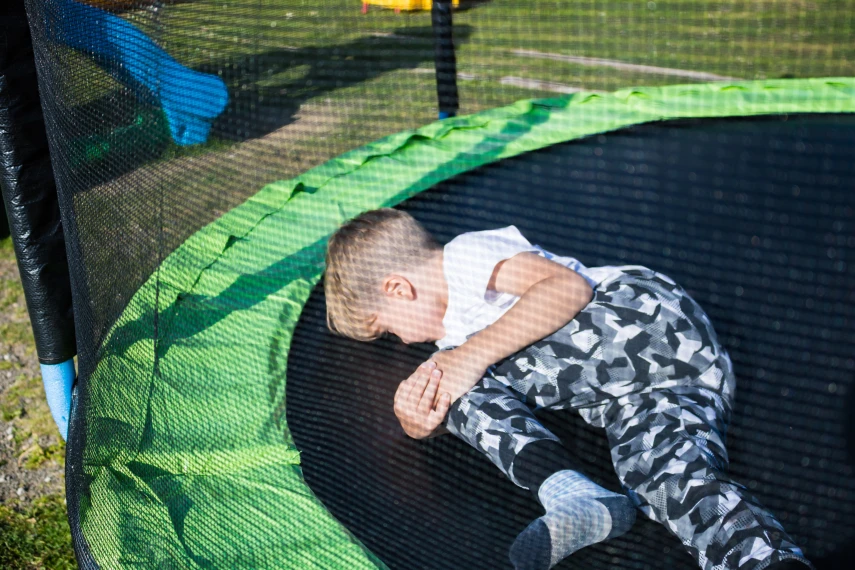
One minute your child is laughing on a trampoline, and the next you’re driving them to an emergency room with a fractured arm or worse.
You need to know if you can sue for a trampoline or bounce house injury.
Here’s the answer. Yes, you can often sue, even if you signed a waiver at the door. North Carolina law lets injured families go after operators who let their equipment fall apart or their staff stop watching the mat, and a waiver rarely covers that kind of carelessness.
O’Malley Tunstall, PC has spent decades helping injured North Carolinians. Call for a free consultation, and let us help you decide what to do next.
Key Takeaways
- A signed waiver almost never blocks a claim built on real negligence, like torn safety netting or an overcrowded jump zone.
- North Carolina contributory negligence laws are different for children than for adults.
- Liability can land on the trampoline park, the rental company, the equipment manufacturer, or the property owner, sometimes more than one of them at once.
- You typically have three years from the date of injury to file, though the clock pauses while the injured person is still a minor.
- Photos, incident reports, and witness names carry significant weight in these cases.
If your child is hurt, O’Malley Tunstall, PC offers a free case evaluation, and there’s no charge unless we recover for you.
You May Be Able to Sue a Trampoline Park or Bounce House in North Carolina
North Carolina holds facility operators to a standard of reasonable care, not a guarantee of safety. When a park skips an equipment inspection or a rental company drops off a bounce house with no instructions on safe use, that standard gets broken in a way courts recognize.
A trampoline park injury attorney looks at what happened on the day of the accident, because the difference between an ordinary bump and a winnable premises liability case usually comes down to one specific failure. That failure may be a missing safety pad, an overcrowded pit, or a staff member who wasn’t watching.
Bad luck alone doesn’t get you compensation. Someone else’s carelessness does, whether the result is a sprained wrist or a traumatic brain injury.
Does the Waiver You Signed Stop You From Suing?
Not necessarily, and this is the question almost every parent asks first. Waivers are contracts, and North Carolina courts will enforce them for the ordinary bumps and bruises that come with jumping. That’s the kind of risk you knowingly accepted when you checked the box at the front desk. What a waiver almost never survives is a claim that the facility itself created an unreasonably dangerous situation, something beyond what a reasonable jumper would expect.
For example, a waiver generally cannot protect a facility from its own negligence. If the netting was torn before your child ever stepped inside, if staff let far more jumpers onto one trampoline than the manufacturer’s rating allows, or if a known hazard went unrepaired for weeks, that’s a different category of claim entirely. The paperwork you signed at check-in usually can’t erase it.
Who Can Be Held Responsible for a Trampoline Park or Bounce House Injury
More than one party can end up on the hook, depending on how the injury happened. Trampoline parks and bounce house rental companies often point fingers at each other once a claim is filed, which is exactly why identifying every responsible party early matters. Three common parties include:
- The park or rental operator, if staff failed to supervise, enforce jumper limits, or maintain equipment.
- The equipment manufacturer, if a defective net, spring, or foam pit panel caused the injury.
- The property owner, if the facility is leased and the owner knew about a hazard, such as a rotting deck under an inflatable, and did nothing.
A single accident can involve two or three of these parties at once, which is part of why these claims take real investigation rather than a quick phone call to the front desk.
Sorting out which of these parties bears responsibility is exactly the kind of digging O’Malley Tunstall, PC does before filing a claim or starting a lawsuit.
What Happens if Your Child Was Negligent
North Carolina applies a graduated standard, often called the “rule of sevens,” based on how old the child was on the day of the injury.
Children under 7 cannot legally be found contributorily negligent at all, no matter what they did.
Children between 7 and 14 get a rebuttable presumption that they’re incapable of contributory negligence. To defeat the claim, the defense has to prove the child failed to act with the care an ordinarily careful child of that same age, intelligence, and experience would have shown, given similar circumstances.
Once a child turns 14, that presumption flips. Courts treat them as capable of contributory negligence, similar to an adult, though this can still be challenged with evidence that the child lacked the judgment typical for their age.
How Long Do You Have to File a Claim in North Carolina?
You generally have three years from the date of the injury to file a personal injury lawsuit in North Carolina, under N.C. Gen. Stat. § 1-52(5). If the injured person is a minor, that clock doesn’t start running until they turn 18. That said, waiting rarely helps a case. Torn netting gets replaced, surveillance footage gets deleted, and witnesses move on, so treating the deadline as a target rather than a formality tends to backfire.
What to Do in the First 48 Hours After the Accident
The early hours after an injury shape the case. If possible:
- Photograph the equipment involved before it gets repaired or removed, including any torn netting, missing padding, or exposed springs.
- Ask the facility for a written incident report and request a copy for your own records before you leave.
- Get the names and contact information of any staff or other parents who saw what happened, since memories fade fast.
Then, share this information with your lawyer.
Frequently Asked Questions
Can I sue if it was my child who got hurt, not me?
Yes, you’d file the claim as your child’s parent or guardian, and any settlement typically gets placed in a protected account until they turn 18. North Carolina courts routinely handle minor settlements this way. You won’t need to wait for your child to become an adult to get the process started.
How much is a trampoline park injury case worth?
It depends heavily on the severity of the injury, the medical bills involved, and how clearly the facility’s negligence caused the accident. A sprained ankle case looks nothing like one involving a spinal cord injury. Most firms, including ours, won’t give a number until they’ve reviewed the specifics.
Does it matter if the accident happened at a friend’s house instead of a commercial park?
It changes who you’d be pursuing, but it doesn’t close the door on a claim. Homeowners insurance often covers these situations.
O’Malley Tunstall, PC: A North Carolina Personal Injury Law Firm
A trampoline park or bounce house accident turns a normal afternoon into medical bills, missed work, and a waiver you’re not sure you should trust. That uncertainty is exactly why these cases get investigated fully before anyone decides what they’re worth, not guessed at from a form signed at the front desk. O’Malley Tunstall, PC has spent decades working personal injury cases for North Carolina families. We take these on a contingency basis, so there’s nothing owed unless we recover for you. Contact our firm today to talk through what happened, and let’s find out together what your case is worth.