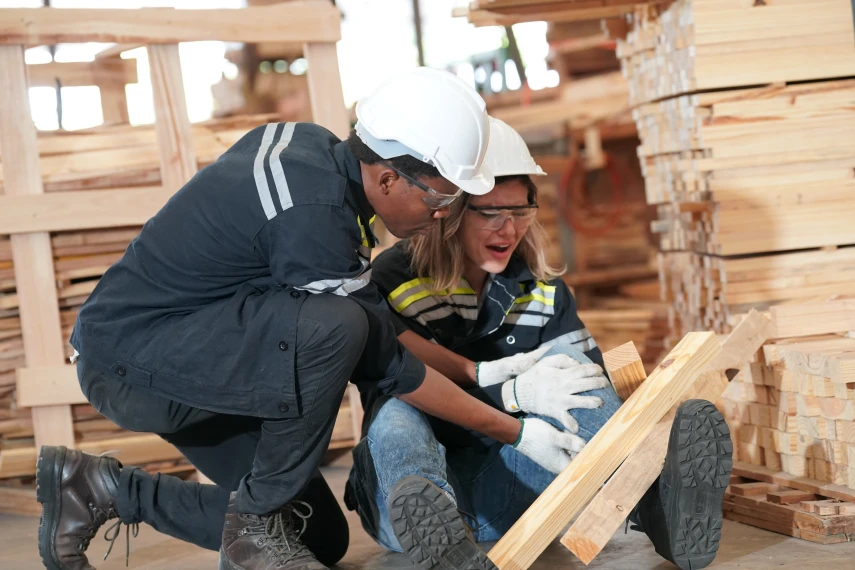
A construction site accident doesn’t just hurt your body. It can mess with every plan you had for the next few months. You are in pain and you may not have a paycheck. You need to know what to do next.
If you were hurt on a job site in North Carolina, workers’ compensation is usually where the process starts. It pays your medical bills and part of your wages no matter who caused the fall, the collapse, or the equipment failure. But when a subcontractor, property owner, or defective machinery played a role, a second path can open up alongside it. In those cases, you may have a third-party lawsuit that can cover additional losses.
Key Takeaways
- Workers’ compensation pays your medical care and part of your wages after a construction accident no matter who caused it, but it generally blocks you from suing your own employer.
- A third-party claim becomes possible when someone other than your employer contributed to what happened.
- North Carolina lets you pursue a workers’ comp claim and a third-party lawsuit for the same accident at the same time.
- Money recovered from a third-party lawsuit usually has to repay your employer’s insurance carrier first, through what’s called a subrogation lien.
- You have 30 days to report the injury to your employer, two years to file with the Industrial Commission, and three years to sue a third party, and missing any of them can end the claim.
O’Malley Tunstall PC handles both sides of this at once for construction workers across North Carolina, and a free consultation is the fastest way to find out which claims may apply to you.
Workers’ Compensation Covers You No Matter Who Caused the Accident
Workers’ compensation exists for exactly this moment. If you were hurt doing your job on a construction site, the North Carolina Workers’ Compensation Act (N.C. Gen. Stat. Chapter 97) requires your employer’s insurance carrier to pay for your medical treatment and roughly two-thirds of your average weekly wage, regardless of who made the mistake. You could have tripped on your own two feet or been hit by a coworker’s forklift, and the benefits work the same way.
The tradeoff is real. In exchange for that no-fault coverage, you generally give up the right to sue your own employer, even if a supervisor’s shortcut caused the accident. There’s no payment for pain and suffering and no emotional distress damages.
When Someone Outside Your Employer Caused the Accident
A construction site is rarely just one company. A general contractor runs the job, but the framing crew, the electrical sub, the crane operator, and the concrete supplier all answer to different employers, and none of them owe you the protection your own employer does.
When one of those outside parties causes your injury, workers’ comp still pays out, and separately, you may have grounds to sue that party directly. Say a delivery driver working for a lumber supplier backs into you while you’re carrying rebar. Your employer’s insurance still covers your treatment. But the driver and the lumber company weren’t your employer, so the rule that shields your own employer from a lawsuit does not shield them.
North Carolina is one of the few states that still follows contributory negligence. If you’re found even slightly at fault for what happened, a third-party lawsuit can be barred entirely. That doesn’t touch your workers’ comp benefits, which stay no-fault, but it makes documentation and legal strategy critical from day one.
Who Can Be a Third Party on a Construction Site
Almost anyone on the job site besides your direct employer and a fellow employee can become a third-party defendant if their negligence caused your injury. Common examples include:
- A subcontractor or their crew, if their work created a hazard on a shared portion of the site
- A property owner, if a known defect on the land contributed to the fall or collapse
- An equipment manufacturer or rental company, if a crane, lift, or power tool failed
- A driver from an outside company, delivering materials or operating a separate vehicle on site
- An architect or engineer, if a design flaw or supervision failure led to the accident
Each of these carries its own insurance policy, and often its own legal team. Sorting out which of these apply to a specific job site takes investigation, and it’s the kind of work a construction accident attorney does.
Yes, You Can Pursue Both Claims at the Same Time
North Carolina does not make you choose. You can accept workers’ compensation benefits while a third-party lawsuit is still working its way through court, and one does not cancel the other out.
How the Two Claims Interact
The workers’ comp claim moves through the North Carolina Industrial Commission on its own timeline, largely separate from anything happening in Superior Court. Your employer’s carrier keeps paying medical bills and wage benefits while the third-party case develops.
What Changes When Both Are Active
Your employer’s insurer gets a say once the third-party case settles or goes to trial. They’re allowed to intervene, receive updates, and, in most cases, recover some of what they already paid you before you see the rest.
Deadlines That Can Sink Your Case
Every path here runs on its own clock, and missing one closes a door permanently.
- Report the injury to your employer within 30 days, in writing if possible
- File a claim with the North Carolina Industrial Commission within two years of the accident
- File a third-party lawsuit within three years of the accident date
If a construction accident left you weighing workers’ comp against a possible lawsuit, O’Malley Tunstall PC can look at the site, the parties involved, and the numbers before you decide what to do next.
Frequently Asked Questions
Can I get fired for filing a workers’ comp claim after a construction accident?
Firing you specifically for filing a workers’ comp claim is illegal retaliation under North Carolina law, and it can create a separate legal problem for your employer. That said, general layoffs or performance issues that would’ve happened anyway aren’t covered by that protection.
What happens if I was partly at fault for the accident?
Being partly at fault won’t touch your workers’ comp benefits, since that system doesn’t look at blame at all. A third-party lawsuit is different, and North Carolina’s contributory negligence rule means even a small share of fault can wipe out that claim entirely.
Do I have to pay back my workers’ comp benefits if I win a lawsuit?
Only if you win or settle a third-party lawsuit for the same injury, and even then it’s not a full payback. Your employer’s carrier is entitled to a lien under state law, but a judge can reduce that amount based on your net recovery and other factors.
Does workers’ comp cover me if I’m a subcontractor’s employee hurt on someone else’s job site?
Yes, workers’ comp coverage follows your direct employer, so a subcontractor’s employee is covered by that subcontractor’s policy, not the general contractor’s policy. If the general contractor’s negligence contributed to the accident, though, that opens the door to a third-party claim against them.
O’Malley Tunstall PC: A Construction Accident Law Firm
Figuring out whether workers’ comp, a third-party lawsuit, or both apply to your situation shouldn’t fall entirely on you while you’re still healing. We untangle this overlap for workers across Raleigh, Rocky Mount, and other parts of North Carolina. We track down subcontractors and property owners who might share responsibility. Contact our firm today, and let’s map out what applies to your case.